Recently, the question was posed, how many museums do we need?
Maybe the answer isn’t a number.
Perhaps the better question is, what purpose does each museum serve?
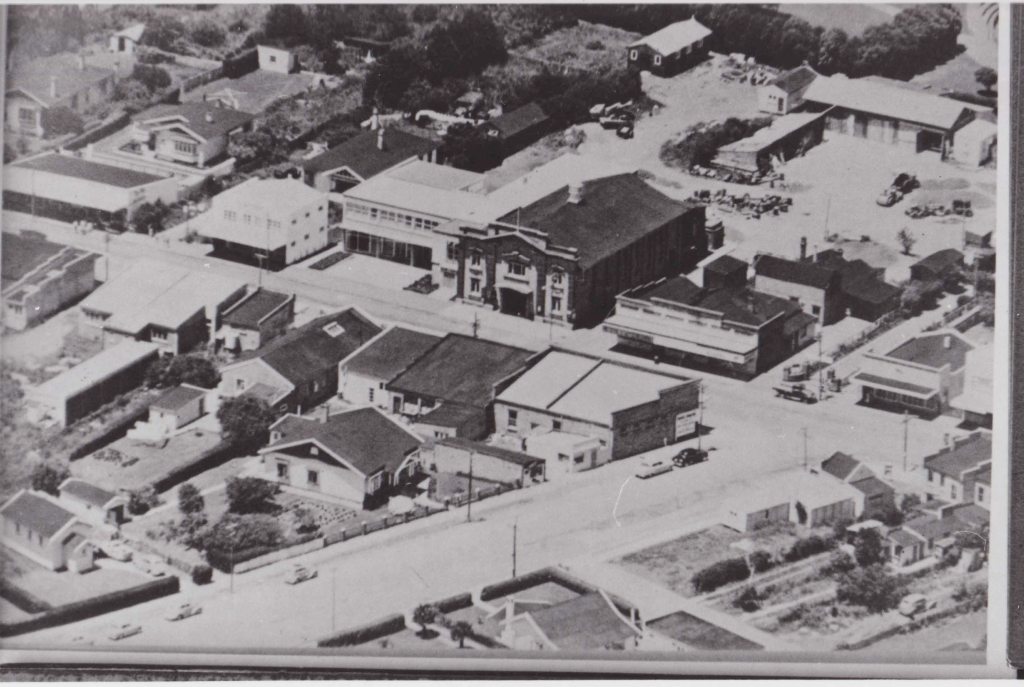
Image: St George Street, Papatoetoe 1956 aerial view from the Papatoetoe Historical Society Museum archives
A regional museum and a local community museum do different jobs. They may both preserve history, care for collections and share stories, but the scale and the relationship with their communities can be very different.
Tāmaki Makaurau has Auckland Museum. It is one of New Zealand’s major museums, with significant collections and an important role in preserving and interpreting the history of Auckland and Aotearoa.
But the existence of a large regional museum does not make a local museum unnecessary.
No regional museum can reasonably collect, research, interpret and regularly exhibit the detailed social history of every suburb and community across Tāmaki Makaurau.
Who remembers the shop that used to stand on the corner?
Who keeps the photographs of the local school, the sports teams and community celebrations?
Who records the stories of families who have lived here for generations, alongside those of communities who have made Papatoetoe home more recently?
Who preserves the histories of our streets, businesses, churches, clubs, community organisations and everyday life?
This is where local museums have an important role.
At local museums, the collections tells stories that are very specifically ours. Photographs, documents and objects become much more meaningful when they are connected with the people, places and memories around them.
Sometimes a visitor recognises someone in an old photograph. Someone else remembers where a building once stood. A family may be able to tell us something about an object or event that isn’t recorded anywhere else.
That community knowledge matters.
Museums are also changing.
A local museum doesn’t need to be somewhere people simply visit to look at objects from the past. It can be somewhere people meet, learn, contribute their own knowledge and talk about the community they live in today.
History can help us understand how our neighbourhood has changed, who has shaped it and what previous generations experienced. It can also provide a starting point for conversations about what is happening now and what our community might look like in the future.
There are fair questions to ask about museums, particularly when public money is involved.
How are they funded? Are they sustainable? Who uses them? What value do they provide to their communities? Are collections being cared for properly? Are they accessible? Are they continuing to serve a useful purpose?
Those are questions museums should be prepared to answer.
But asking whether we have “too many museums” simply because another museum exists twenty minutes away misses something important.
Local history happens locally.
If every local collection were simply transferred to the nearest large institution, the objects might survive. But preservation is only part of the job.
The relationships, memories and local knowledge surrounding those objects need somewhere to live as well.
So, how many museums do we need?
Maybe that’s the wrong question.
Perhaps we should be asking:
What stories would disappear if this museum wasn’t here?


Leave a Reply